

Dedication
For those whose names were never written down.
For the hands that built this country and were buried beneath it.
For anyone who has been told they did not belong on land they bled for.
PREFACE
WHAT THE WEST TOOK
Before there were towns with names meant to sound like mercy, before there were proclamations and badges and the tidy fiction of law, there was the work.
Men came west because hunger moves faster than rumor and because the idea of gold has always sounded like salvation to people already halfway damned. They came with hands already scarred from fields that no longer fed them and factories that swallowed boys whole. They came with prayers folded small in their pockets and with debts they could not outrun. They came because the land back east had decided it was finished with them and the land out here had not yet learned their names.
The earth did not open willingly.
Gold mining in the late years of the nineteenth century was not a romance, no matter how often it was painted that way. It was an act of persuasion carried out with iron and fire. Men drove themselves into the ground like nails, carving tunnels where the air thinned and the light failed, where the rock sweated and shifted and remembered the weight it had carried long before hands ever touched it. Cave-ins were common enough to be spoken of with shrugs. Explosions misfired. Timber supports splintered without warning. Dust filled lungs until men coughed blood into their sleeves and called it nothing.
Chinese immigrants were brought west by promise and kept there by necessity. They laid track and dug shafts and did the work white men did not want their names attached to. They were paid less and charged more and blamed for the fear their presence stirred in towns that relied on their labor but refused them belonging. They lived apart. They died apart. Their names were rarely written down.
When a mine collapsed, the question was not how many were lost but how quickly the work could continue. Sometimes bodies were retrieved. Sometimes they were sealed in and marked as unfortunate losses. Sometimes the entrance was boarded up and the ground above it was blessed and the town moved on. The earth learned to hold breath.
Settlers fared little better. Families followed trails already stained with loss, wagons breaking wheels on the bones of those who had come before. Disease traveled faster than letters. Winters arrived without apology. Crops failed. Children were buried under names scratched into wood that rotted before grief did. Indigenous people were pushed aside, marched away, or killed outright, their land renamed and resold as opportunity.
The West was not empty. It was emptied.
Every town was built atop a bargain no one wanted to speak aloud. Prosperity in exchange for silence. Safety in exchange for forgetting. Gold pulled from the ground carried more than value. It carried weight. It carried memory. It carried the names of men who never made it back to the light.
And sometimes, when enough names were left unspoken, when enough bodies were sealed beneath boards and prayer, the ground remembered for them.
This is not a story about ghosts appearing where they should not.
It is a story about what happens when the dead are never allowed to leave at all.
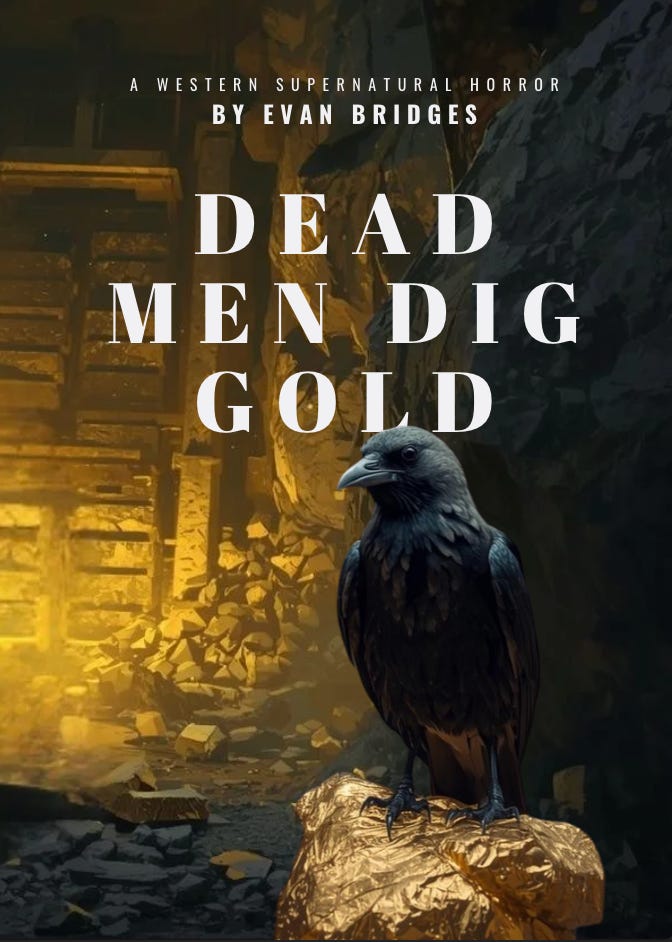
Dead Men Dig Gold is my debut novel.
Thank you so much for reading.
I will be posting new sections each week, subscribe to follow along.
©️ 2026 Evan Bridges
For rights questions contact: evanbridgesauthor@gmail.com
Well done. Building a lot of tension already.
When a mine collapsed, the question was not how many were lost but how quickly the work could continue. - what a sad world.
Great prologue! The proses were wonderful