

CHAPTER SIX
RESTLESS
Red Mercy did not sleep. It merely pretended to. Lights went out one by one, doors shut, voices fell quiet, but the rest never came. Not proper, not the kind that leaves a man whole when mornin’ comes. It was a shallow thing, a drift, a slipping.
Crowe learned that early. He’d wake in the dark with his hand already on his gun and no memory of what had stirred him. Sometimes it was a sound. Sometimes it wasn’t anythin’ at all, just the feel of bein’ watched by somethin’ that didn’t need eyes.
That night it came on slow. The wind died first. It didn’t taper or ease, just stopped like a breath cut short. The town held still in a way that didn’t belong to sleep, and even the boards seemed to settle different, like they were listenin’.
Crowe opened his eyes. He didn’t know what had woken him, only that he was awake and that the quiet wasn’t right. He sat up on the edge of the bed, boots already half on from habit, and waited.
That was when he heard it. Not voices, but movement. Soft at first, a shuffle, then another, then many.
Crowe stepped outside.
The street was full. Men and women moved through it, some still in their nightclothes, others half-dressed like they’d stopped in the middle of rememberin’ who they were. They moved slow, not wanderin’ but not hurryin’ neither, all driftin’ in the same direction toward the mine.
Their eyes were open but fixed on nothin’, faces slack like sleep had taken everything that made ‘em their own and left the rest standin’.
Crowe watched a man pass him, close enough to touch. “Hey,” he said.
No response.
He stepped into the man’s path and put a hand out. The man walked into it like it weren’t there. Crowe grabbed his shoulder, harder this time. “Wake up.”
The man stopped. For a second nothin’ moved, then his head turned, slow, too slow. His eyes found Crowe, and for just a flicker there was somethin’ in ‘em. Not recognition. Not fear.
Hunger.
The man’s hand shot out. Crowe barely got his arm up in time. The grip was wrong, too tight, fingers diggin’ in like they meant to pull somethin’ loose.
“Easy,” Crowe snapped, tryin’ to wrench free.
The man didn’t ease. He lunged.
Crowe drove his shoulder into him, knockin’ him back a step, but the man came again without balance or sense, just forward like that was the only direction left in him. They hit the dirt together. Crowe rolled and came up on one knee, hand already on his gun, but he didn’t draw. He didn’t want to. He didn’t understand what he’d be shootin’.
“Stop,” he said.
The man didn’t hear it. He came again, faster now, mouth open like he meant to bite.
Crowe struck him once, then twice, hard enough to stagger him but not enough to break him. It didn’t matter. The man didn’t feel it. He grabbed Crowe’s coat and dragged him down again, fingers clawin’ at his throat now, not wild but certain, like he knew exactly where to press.
Crowe slammed his forearm up under the man’s chin and shoved. “Wake up!”
Nothin’. Just that same empty look, that same wrong intent.
Crowe twisted, got his weight under him, and drove the man back with a sharp kick to the chest. The breath left him in a harsh sound, but he didn’t fall proper. He just folded and came forward again, like he couldn’t stop, like he didn’t know how.
Crowe’s patience broke. He drew the gun and pressed it hard against the man’s ribs. “Don’t.”
For a second, the world held.
Then the man’s hand tightened on him.
Crowe shoved him off instead of firin’, breath comin’ sharp now, pulse loud in his ears. He backed away.
That was when he saw the rest of it.
The town hadn’t just come out. It was workin’.
Men bent to tasks without speakin’, liftin’ boards, hammerin’ nails with slow, steady strikes. Women hauled water, stacked supplies, swept streets already clean. Every motion was precise and empty, like they were followin’ instructions laid down long before the night had come.
No one looked at him. Not one. They moved around him when they had to, same as they would a post or a wall, never breakin’ their rhythm. And always, always driftin’ toward the mine.
Some went straight to it, vanishin’ into the dark without hesitation. Others worked as they went, buildin’ the town in the same motion that pulled ‘em toward whatever waited beneath it.
Crowe turned in place, tryin’ to take it in, but there was too much of it. Too many bodies. Too much silence.
The sound of work carried through the night, steady and wrong. Hammer on wood, shovel in dirt, boots draggin’ through dust.
“Juniper,” he said, low.
He didn’t see her. He didn’t see anyone who was still themselves.
The man he’d fought was back on his feet now, already movin’ again like nothin’ had happened.
Crowe stood there a long time, watchin’ it unfold. Every instinct in him said to stop it. He didn’t know how.
He moved toward the mine before he realized he’d decided to.
The closer he got, the colder it felt. Not the air, somethin’ else. The ground under his boots had a give to it, subtle but there, like it remembered bein’ opened and hadn’t quite set right since.
The entrance loomed ahead, black and wide, waitin’.
One by one, they stepped inside. No hesitation. No fear. Just that same slow, certain movement, pressin’ against the boards keepin’ em out, clawin’, arms reachin’ in.
Crowe stopped short of it.
He could hear it now, beneath the work and beneath the movement.
Somethin’ deeper. Somethin’ buried.
The last of the townsfolk slipped into the dark, and then it was quiet again, just like that.
Crowe stood alone at the mouth of the mine, gun in his hand, heart still poundin’ like he’d been runnin’ for miles. He didn’t go in. He didn’t even come close. He backed away instead, step by step, eyes fixed on the dark like it might follow.
It didn’t.
It didn’t need to.
He woke in his bed with the sun in his eyes. For a second he didn’t move or breathe. The room looked the same, felt the same, like nothin’ had happened.
Crowe sat up slow.
His boots were by the door. Clean. His coat hung where he’d left it, no blood, no sign of a fight.
He checked his hands. No bruisin’. Nothin’.
Outside, the town moved like it always did. Voices, laughter, the sound of work done by men who knew they were doin’ it.
Normal.
Crowe stepped out into the street and watched ‘em, every face, every movement, lookin’ for it, for that emptiness.
He didn’t find it.
The man he’d fought passed him a few minutes later, carryin’ a crate, noddin’ polite as he went. No sign he remembered anythin’. No sign any of ‘em did.
Crowe stood there longer than he meant to, the mornin’ sun climbin’ higher, the noise of the town settlin’ into somethin’ almost believable.
He told himself it had been a dream.
He didn’t believe it.
Somewhere beneath his feet, the ground held its quiet, waitin’.
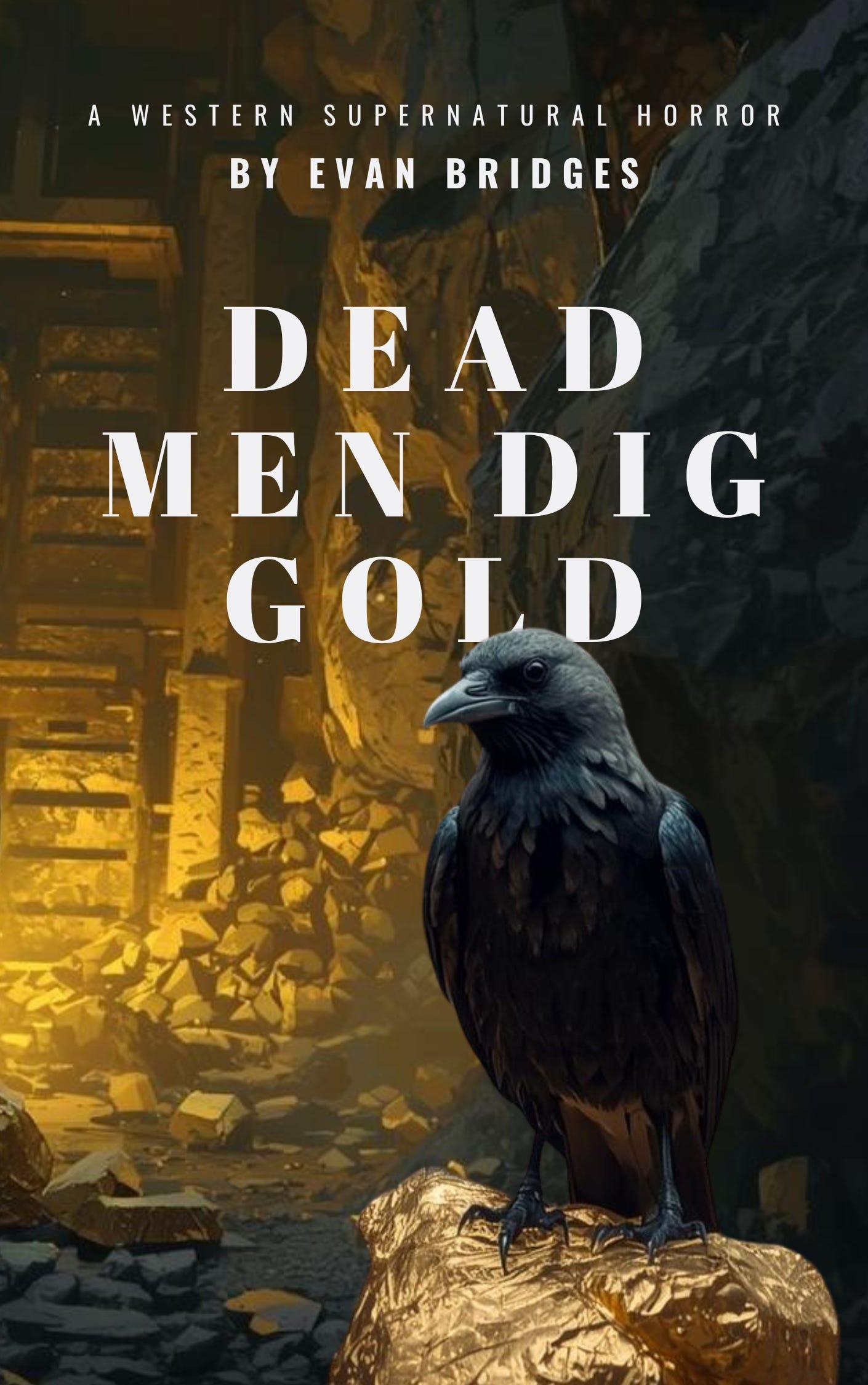
Dead Men Dig Gold is my debut novel.
Thank you so much for reading.
I will be posting new chapters every Friday, subscribe to follow along.©️ 2026 Evan Bridges
For rights questions contact: evanbridgesauthor@gmail.com